

Your Crowd Is Killing the Scene: When Raves Become Content Studios
We blame weak lineups. We blame inflated ticket prices. We blame social media DJs, ghost producers, bad promoters and copy-paste festivals. Sometimes those criticisms are justified. But there is an uncomfortable question almost nobody wants to ask: what if the crowd is part of the problem too?
Not every new raver is destroying electronic music. Not every person who takes a video is disrespecting a culture. And not every large event is automatically "fake." Growth is not the enemy. But a scene cannot grow indefinitely while abandoning the behaviours, values and shared understanding that made people care about it in the first place.
A rave is not simply a room where a DJ plays loud music and people buy tickets. At its best, it is a collective experience: an agreement between artist, promoter and crowd to be present, respect the people around them, and let the music dictate the energy. When that agreement disappears, the venue may still be full. But the culture inside it is already becoming hollow.
The dancefloor used to be a sanctuary. Now, too often, it is a content studio.
The Phone Is Not the Problem. The Behaviour Is.
Let us be precise: phones are not inherently evil.
A short clip can preserve a memory. Fan footage can help an emerging artist get noticed. User-generated content can make people discover events, labels and sounds they would never otherwise encounter. In a music economy built around visibility, pretending that social media has no value would be dishonest.
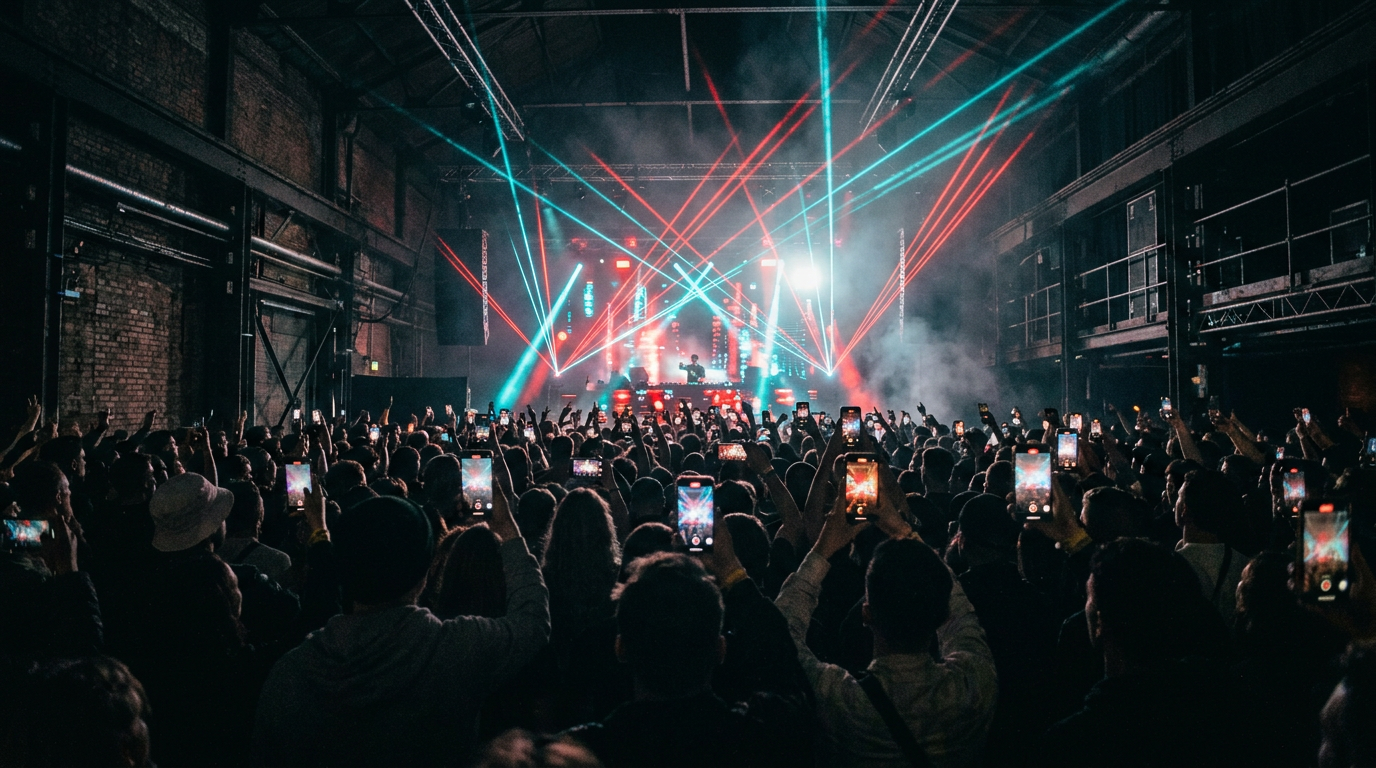
The problem starts when recording becomes the main reason for attending.
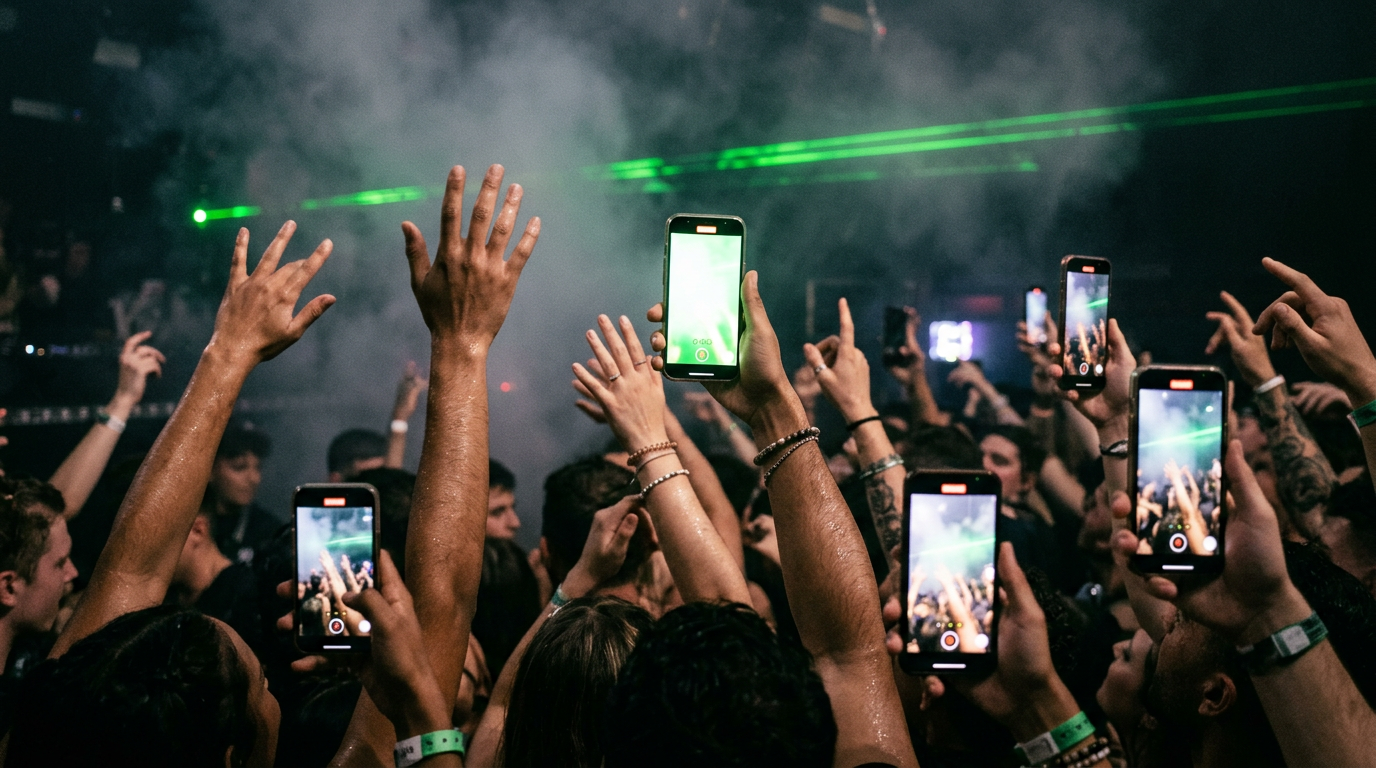
When the most important moment of the night is not what you felt but what you managed to upload, the relationship with music changes. The dancefloor becomes a backdrop. The DJ becomes content. The crowd becomes an audience watching itself.
This is not just an online complaint from people who miss the past. The debate has become visible enough that more venues, promoters and artists are actively experimenting with phone-free or camera-restricted dancefloors. DJ Mag documented the growing resistance to phones on dancefloors, including concerns from DJs, promoters and club operators about distraction, privacy and the pressure to create moments that film well. The piece also describes how venues and parties have responded with camera stickers, clearer rules and dedicated event photographers rather than unrestricted crowd filming.
Skiddle's 2026 report on no-phone raves similarly connects these policies to the demand for greater immersion, privacy and community. The point is not that every event must ban devices. The point is that the market is visibly asking for an alternative.
That should tell us something.
"Proof of Attendance" Is Replacing Experience
The modern dancefloor has developed a strange hierarchy.
Being there is no longer always enough. People want evidence that they were there: the biggest drop, the biggest reaction, the artist at the booth, the outfit, the laser, the room at its most visually impressive. The actual event becomes secondary to the proof that the event happened.
That pressure is not limited to the crowd. It affects the entire ecosystem.
Artists feel pushed to deliver identifiable viral moments. Promoters feel pushed to make every room look spectacular on a vertical screen. Audiences arrive expecting the 15-second highlight reel they already saw online.
But a great DJ set is not a collection of highlights.
It is tension, release, uncertainty, pacing, risk, contrast and patience. It needs room to breathe. When every track must generate an immediate reaction, DJs are incentivised to play for the camera rather than for the room. Long transitions become risky. Strange records become risky. A gradual journey becomes risky. The result is a set that can look explosive online while feeling completely disposable in person.
As Pioneer DJ / AlphaTheta's reporting on phone policies makes clear, this is not a simple anti-technology argument. DJs and promoters often benefit from audience content, while also recognising that a sea of phones can weaken the connection between booth and dancefloor.
That contradiction is the real issue.
Visibility helps careers. But constant visibility can destroy the conditions that make a live experience worth sharing.
Pioneer DJ produced a full documentary on this exact topic: INSTA DJ | Social Media and the New Age Dancefloor. It features insights from Carl Cox, Annie Mac, Danny Howard and others on how the phone culture reshaped club dynamics. Worth the 40 minutes.
The "Underground Look" Is Not Underground Culture
Hard Techno, Hardcore and Industrial aesthetics are now everywhere.
Black outfits. Harnesses. Sunglasses at 4 AM. Metallic visuals. Distorted kicks. Dark rooms. Warehouse imagery. "No sleep" captions.
There is nothing wrong with enjoying an aesthetic. Self-expression has always been part of nightlife. Clothing, visual identity and attitude can make a space feel powerful. But an aesthetic is not a culture.
You do not become part of an underground community because you bought the uniform. You become part of it through how you behave in the room:
- Respecting other people's space.
- Not treating dancers as background characters in your video.
- Understanding consent.
- Looking after people when they need help.
- Giving the DJ space to take risks.
- Supporting local nights, not only headline events.
- Caring about music beyond the three clips that went viral this week.
The underground was never supposed to be a dress code. It was a set of social values: freedom, expression, mutual respect and a belief that the room belongs to everyone in it. When those values are replaced by clout, the look may survive. The substance will not.
The Crowd Has Started Training DJs to Play Worse
This is where the conversation becomes uncomfortable for artists too.
Crowds shape performance. If an audience only reacts to instant drops, familiar edits and maximum-speed transitions, then DJs learn quickly what is rewarded. They are not stupid. They adapt.
The outcome is predictable: less patience, less musical progression, less experimentation. More predictable drops, more recognisable moments, more sets designed to generate clips.
This does not mean fast mixing is automatically bad. Hardcore and Uptempo have always embraced intensity, impact and physical energy. Hard Techno can be brutally direct by design. The problem is not speed. The problem is sameness.
There is a difference between intensity and constant stimulation.
A powerful set can be fast without being empty. A Hardcore set can be aggressive without turning into a sequence of interchangeable drops. A Hard Techno set can be heavy without relying on one familiar social media formula every three minutes.
The best artists understand this. They control tension. They understand contrast. They know that making a crowd wait is not a failure: it is part of the story. But the crowd has to allow that story to exist. If the dancefloor cannot hold attention, the DJ stops telling a story and starts feeding an algorithm.
For a wider look at how electronic music can lose identity when output, trends and viral drops and surface-level visibility become the priority, see our breakdown in Artist vs. Artist-Product. And for a deep dive into the formula trap and how a sound becoming a copy of itself damages a genre from the inside, that conversation is already live on the blog.
Crowd Tourism Is Not Community
Every rapidly growing genre attracts new people. That is normal. It can be healthy. New listeners bring energy, ticket sales, opportunities and fresh perspectives. No serious scene should become a closed club for people who arrived first.
But there is a difference between entering a community and consuming it.
"Crowd tourism" begins when people engage with a scene only because it is fashionable, visually marketable or socially valuable to be seen there. They arrive for the hype, demand instant access to the biggest moments, and leave as soon as the algorithm moves somewhere else.
The damage is rarely immediate. It happens gradually:
- Smaller local events struggle to compete with large, highly visual productions.
- Tickets become more expensive as demand rises.
- Artists feel pressure to make their sound more accessible and recognisable.
- Regulars lose the spaces where they built real relationships.
- The trend moves on.
- What remains is a more expensive, less connected version of the original scene.
This does not happen everywhere. It is not inevitable. But it is a risk whenever rapid growth is treated as the only definition of success. A scene with no local foundation cannot survive on viral peaks alone.
For context on the broader financial and cultural pressure facing nightlife, read The Festival Collapse. It is particularly relevant here: a culture cannot rely forever on bigger budgets, bigger lineups and bigger visual spectacle while ignoring the long-term health of its local ecosystem.
Privacy Is Not an Optional Extra
The phone debate is often reduced to a question of atmosphere. But privacy matters too.
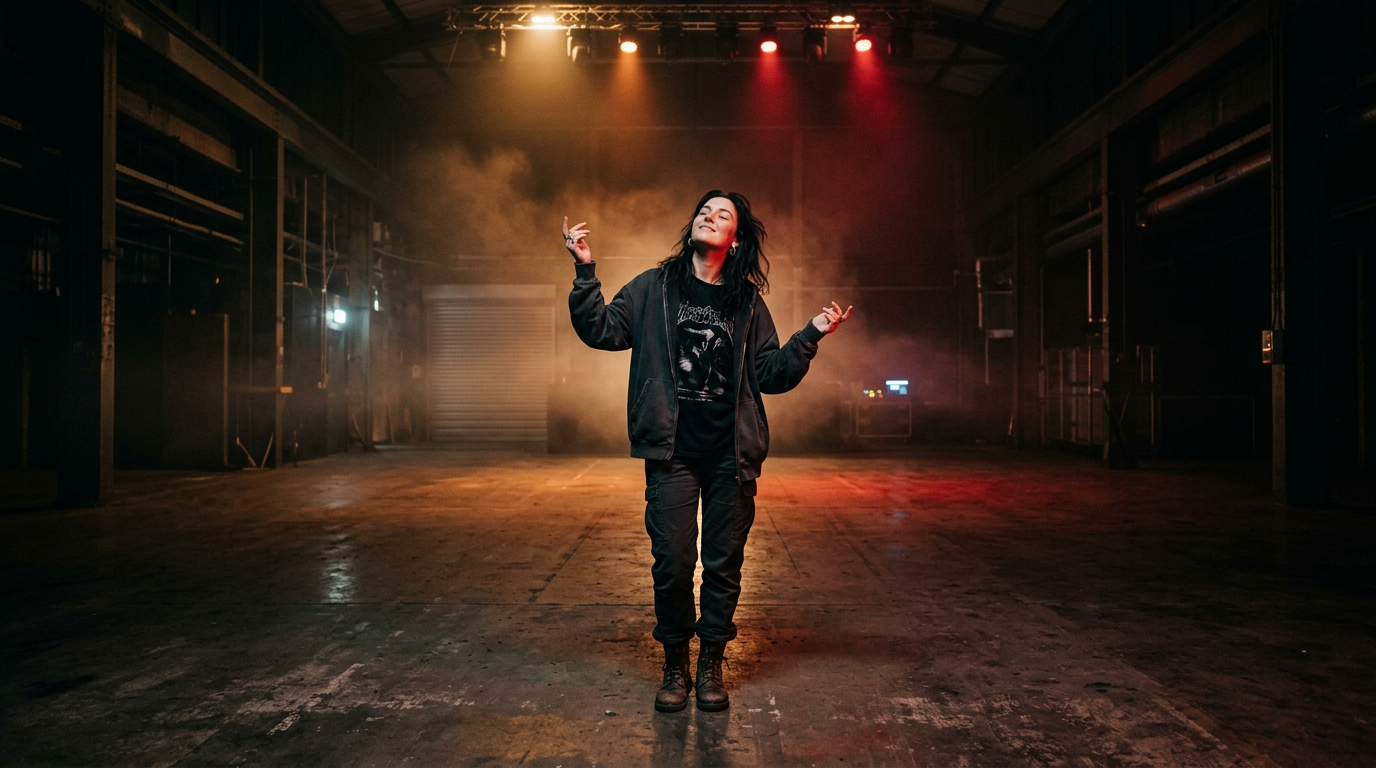
People go to clubs and raves to express themselves. They dance badly. They dress differently. They explore identity. They connect with strangers. They let go. That freedom becomes harder when anyone around you can record you, upload you or turn you into a joke for strangers online.
This is especially important in spaces that serve queer, marginalised or sex-positive communities. Camera restrictions are not merely nostalgic rules. They can be part of creating an environment where people feel safer being fully themselves.
Pioneer DJ's interviews with club operators and nightlife figures describe privacy as a central reason for dancefloor camera policies. The article includes perspectives from venues and community representatives who frame the issue not as a technological ban, but as a question of respect, consent and shared responsibility.
That is the line worth defending. You do not need to ban every phone from every venue. But filming strangers without consent should never be treated as normal rave behaviour.
What Promoters, Artists and Audiences Can Actually Do
A culture does not improve because people post nostalgic complaints about "how it used to be." It improves when the people in it set standards.
For promoters
- Make the event's phone policy clear before people enter.
- Consider camera stickers, no-flash rules or phone-free areas where appropriate.
- Use an official photographer or videographer if content is needed.
- Publish crowd and consent guidelines alongside ticket information.
- Build lineups around musical identity, not only online reach.
- Support smaller rooms, local artists and developing communities.
For artists
- Do not train your crowd to expect only viral drops.
- Take musical risks, even when they are not guaranteed to generate clips.
- Communicate the type of atmosphere you want in your sets.
- Avoid treating a phone-filled crowd as the only proof that a moment worked.
- Remember that an artist's value is not the same as their visibility. For a deeper look at this, read The Death of the DJ-Producer.
For the crowd
- Take one clip if you genuinely want a memory. Then put the phone away.
- Do not film strangers without consent.
- If you need to check messages, step away from the centre of the dancefloor.
- Give DJs space to build tension.
- Respect personal space.
- Support the local parties that make a scene possible.
- Stop treating every event as a personal branding opportunity.
None of this is radical. It is basic respect.
And if you are an artist trying to figure out how to make your music and identity understandable to labels and audiences without chasing viral formulas, that conversation is worth having too.
Growth Without Culture Is Decay
The Hard Techno, Hardcore and Industrial worlds do not need fewer people. They need people who understand that entering a scene also means contributing to it.
The answer is not gatekeeping every newcomer. It is not pretending that the past was perfect. It is not banning technology because technology exists.
The answer is to stop confusing consumption with participation.
A rave is not a content farm. A DJ is not a jukebox. A dancefloor is not a catwalk. And an underground scene is not defined by how dark it looks on Instagram.
It is defined by what people protect when nobody is filming.
Put the phone down. Respect the room. Stay for the journey.
The scene does not need more spectators. It needs better participants.
References
- Evans, N. (2025). Phones on the dancefloor: where do we go from here? DJ Mag.
- Skiddle Staff. (2026). Switching Off and Dialling In: The Rise of No-Phone Raves. Skiddle.
- Pioneer DJ / AlphaTheta. Why are "no phones" policies becoming increasingly popular?
- Pioneer DJ / AlphaTheta. INSTA DJ | Social Media and the New Age Dancefloor (documentary).
- The Straits Times. The dance floor is disappearing in a sea of phones.
This article is an editorial analysis of changes in contemporary club culture. It does not claim that every new attendee, event, artist or use of social media harms electronic music. Its purpose is to discuss the tension between growth, digital visibility, privacy, musical attention and community responsibility.