
Paying €50 to kill your career? The guaranteed streams trap explained
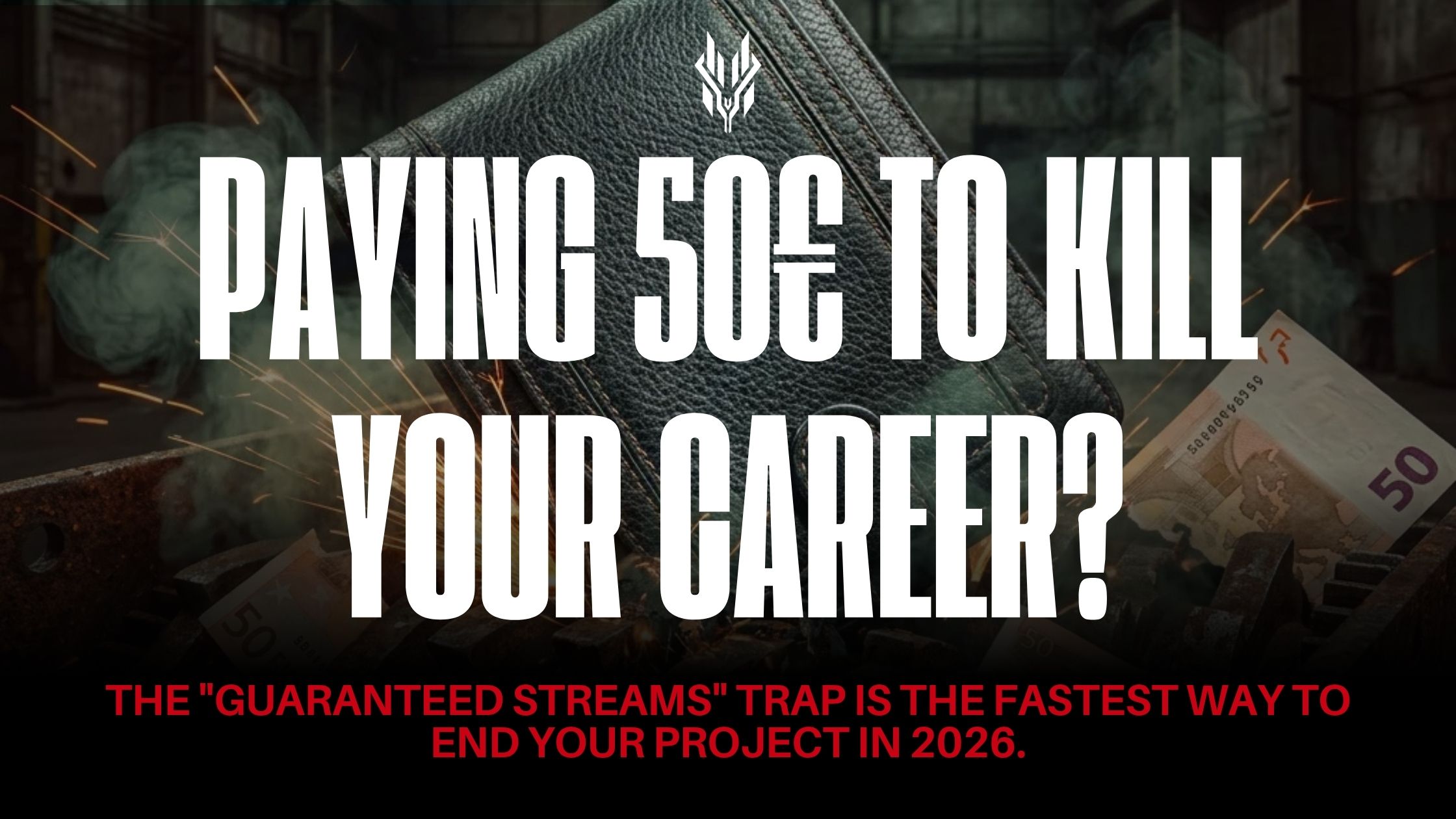
A DM lands in your inbox: "Your track is perfect for our 50K-follower Hardcore playlist. Guaranteed streams, only €50." It sounds cheap. It sounds easy. It is, in fact, one of the fastest ways to damage your artist profile, your royalties and your credibility in 2026.
This article is not a moral lecture. It is a practical, evidence-based breakdown of what guaranteed-stream services actually do to your Spotify data, why the consequences have become harsher than ever, and how to build a real audience without paying for a fake one.
1. The €50 offer: what you are actually buying
You release a new track. Within hours, a message appears: guaranteed placement on a playlist with tens of thousands of followers, for a small fee. You pay. The streams arrive. The counter moves.
Then, two weeks later, everything stops.
The playlist drops your track. Your audience does not grow. Your followers do not move. Your next release performs worse than the previous one. In some cases, artificial streams also lead to withheld royalties, corrected public metrics, playlist removals or action from your distributor.
The €50 was not an investment in your career. It was a payment for a vanity metric.
There is an important distinction between legitimate music promotion and guaranteed streaming activity. A legitimate campaign can generate exposure through Meta advertising, content marketing, press, direct fan communities, editorial pitching, transparent curator submissions, artist collaborations and live events. None of these methods can honestly guarantee a specific number of Spotify streams. They create opportunities; the final result depends on whether real listeners actually choose to listen, save, follow and return.
A service that guarantees 10,000 streams for €50 is not selling attention. It is selling a number. And Spotify knows the difference.

2. Spotify's artificial streaming policy: what the platform actually says
Spotify defines artificial streaming as activity that does not reflect genuine user listening intent — including anything generated by bots, scripts, automated processes or paid services designed to inflate numbers.
The platform is equally direct about the services that target artists. Spotify's guidance on third-party services that guarantee streams tells artists to avoid any company that promises a specific number of streams, followers or playlist placements in exchange for money.
When confirmed artificial streaming is detected:
- Royalties are withheld. Artificial streams do not earn money.
- Public stream counts are corrected. Monthly listeners, all-time totals and chart positions are adjusted.
- Recommendation algorithms are not influenced. The fake data does not trigger Discovery Mode, Discover Weekly or Release Radar.
- Tracks may be removed from Spotify playlists or from the platform entirely.
- Distributors are charged. Since April 2024, Spotify applies a per-track penalty of approximately $10 / €10 to distributors for every track with flagrant artificial streaming — a cost most distributors pass directly to the artist.
In other words, you can lose the royalties, lose the streams, damage your algorithmic profile and pay a penalty on top. The €50 "promotion" can end up costing far more than the price tag suggested.
For a deeper look at how Spotify detects and penalises fake activity, read our detailed investigation: The Spotify Fake Check: Spotting fake success in the hard scene.
3. What happens to your data when the streams are not real
An artificial stream is not simply a play from a listener you don't recognise. The problem goes deeper: it corrupts your entire data profile.
Imagine 10,000 streams arrive, but nothing else changes:
- No meaningful increase in followers
- No significant number of saves
- No playlist additions from real users
- No profile visits
- No repeat engagement
- No growth in your audience outside Spotify
- No improvement in bookings or fan activity
The stream counter moves, but the artist profile stays exactly where it was. That is the difference between traffic and audience.
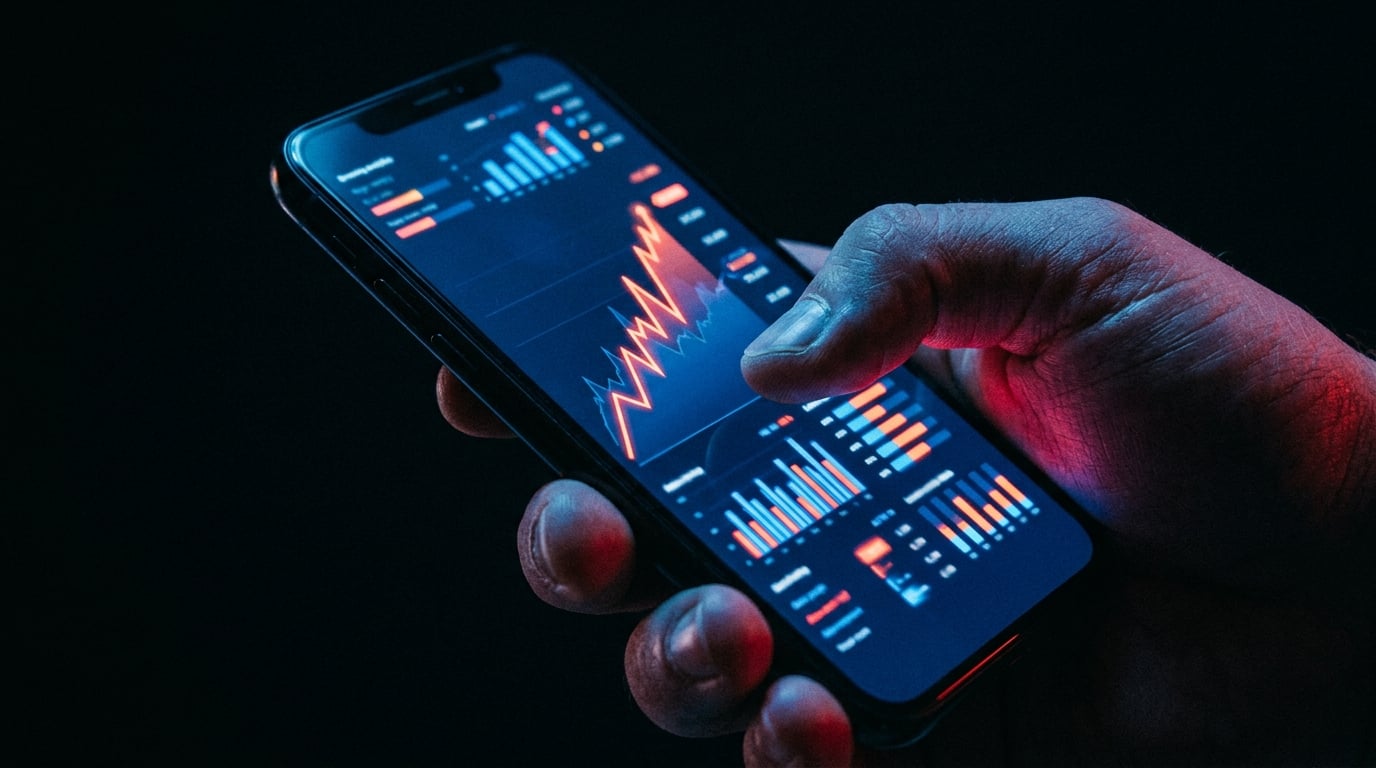
Spotify's algorithm observes the ratio between streams and engagement signals — saves, follows, repeat listens, playlist adds. A track with high streams but low saves sends a clear signal: this content is not connecting with real people. The result? The algorithm deprioritises your music instead of amplifying it.
A real listener can become a follower, a buyer, a ticket holder, a DJ supporter, a long-term fan. An artificial account only creates activity on a dashboard — and then poisons the data that should guide your next move.
4. The illusion of progress: why the €50 trap keeps working
The most dangerous part of these services is not always the immediate penalty. It is the illusion of progress.
A sudden increase in streams can make an artist believe the strategy is working. The artist then:
- Spends more money on similar campaigns
- Uses the inflated numbers to approach promoters
- Presents the statistics to labels
- Assumes the track is performing better than it really is
- Makes release decisions based on corrupted data
- Ignores the fact that the audience is not growing
The result is a false picture of the artist's career. You are not learning which listeners respond to your music. You are not discovering which countries, cities or communities are relevant to your sound. You are not building a reliable promotional system.
You are watching an artificial number rise — and when the campaign ends, the number stops rising with it.
This pattern is not exclusive to small artists. In the cost-of-silence breakdown of stage-prop culture, we examined how vanity metrics distort the entire booking ecosystem — inflated profiles create inflated fees, and the promoter who cannot sell the room pays the price.
5. Why playlist follower counts can be misleading
A playlist with 50,000 followers does not mean 50,000 people are actively listening to every song added to it. A playlist may have:
- Inactive followers
- Poor listener retention
- Followers gained through questionable methods
- An audience that does not match your genre
- Very low engagement per track
This is particularly important in Hardcore, Uptempo and Hard Techno. A playlist may have a large audience interested in generic electronic music, but that does not mean those listeners want a 190 BPM track, a Frenchcore release or an aggressive Uptempo production.
Audience fit matters. A smaller playlist with genuine listeners who understand your sound can be more valuable than a huge playlist where nobody saves the track or returns to your profile.
6. Guaranteed placement is not editorial pitching
Spotify provides an official pitching system through Spotify for Artists. Artists can submit an upcoming, unreleased song to Spotify's editorial team. The platform recommends delivering the music and pitching it at least seven days before release.
Critical distinction: editorial pitching does not guarantee playlist placement. Spotify clearly states that pitching gives a release the opportunity to be considered — it does not guarantee selection. That uncertainty is not a weakness. It is evidence that the system is based on consideration and audience relevance, not a purchased result.
Similarly, Release Radar — one of Spotify's personalised playlists — updates every Friday and may include music from artists a listener follows, artists they have previously listened to, and other artists Spotify believes they may enjoy. Each listener can receive one song per artist per week, and a release may remain eligible for up to four weeks.
This makes real followers and real engagement strategically valuable. But Release Radar is not a guaranteed viral mechanism — the audience still decides whether the music connects. That is why the objective should not be to create a large-looking audience, but to create an audience that actually responds.
7. The enforcement reality in 2026
The consequences of artificial streaming have become significantly harsher. According to reporting by Chartlex on the 2026 streaming fraud crackdown, the detection stack now includes:
- Distributor-level pre-upload screening before tracks even reach the platform
- Platform-side anomaly detection based on listen-time uniformity, geographic clustering and subscriber-to-stream ratios
- Third-party cross-platform monitoring by companies like Beatdapp and Pex
The September 2024 indictment of Michael Smith for wire fraud and money laundering — stemming from a $10 million streaming fraud operation — established that artificial streaming is prosecutable as a federal crime. This is not a theoretical risk. People are going to prison for this.
Spotify also lists clear warning signs that your profile may have been affected:
- Sudden unexplained spikes followed by immediate drops
- Unexpected listener locations where you have no prior audience
- Unusual streaming sources
- A sudden short-lived increase in followers
These signals do not automatically prove that you purchased streams — an unexpected spike can have legitimate explanations. But they should trigger an immediate investigation.
How fake streams work and why the industry is cracking down harder than ever.
8. What if you didn't knowingly buy fake streams?
This is an important point. An artist may be added to a suspicious playlist without requesting it. A third-party service may use methods the artist does not fully understand. A promotional company may promise "real listeners" without explaining how those listeners are acquired.
If you notice abnormal activity, do not ignore it.
Spotify recommends informing your label or distributor and sharing details of any promotional services involved. You should preserve:
- Invoices and contracts
- Emails and direct messages
- Campaign descriptions and playlist links
- Dates of the campaign
- Screenshots of Spotify for Artists data
- Geographic and source-of-stream information
If a suspicious playlist has added your music, Spotify provides a way to report it directly. The earlier you document what happened, the easier it is to demonstrate that you did not intentionally attempt to manipulate the platform.
Recovery is possible — but slow. According to industry analysis, recovering from algorithmic damage typically takes 60 to 90 days of legitimate, ad-driven promotion to age out the fraudulent data.
9. How to audit a promotion service before paying
Before spending money on any Spotify promotion, run through this checklist:
Do they guarantee streams?
If yes, walk away. No legitimate campaign can guarantee that real people will listen to your music a specific number of times.
Do they guarantee playlist placement?
Major red flag — particularly if the placement is supposedly on Spotify editorial or algorithmic playlists. Spotify states that third-party services guaranteeing playlist placement for payment violate its terms.
Can they explain exactly how the campaign works?
You should understand: where the music will be promoted, who the target audience is, whether the campaign uses advertising, whether playlist curators are independent, and what reporting you will receive. If the answer is vague, the offer is not transparent enough.
Are they selling listeners or selling exposure?
Exposure can be legitimate. Guaranteed listening activity is not. A service may promise to submit your track to relevant curators, but there should be no guarantee that those curators will accept it or that listeners will generate a specific number of streams.
Does the campaign make sense for your genre?
If you produce Hardcore, Uptempo or Hard Techno, the campaign should reach people who already engage with those styles. A large general playlist may create more skips than genuine interest — and skips actively damage your algorithmic profile.

10. What legitimate promotion actually looks like
Real promotion is less glamorous than a guaranteed stream package. It usually involves:
- Strong short-form video content — Reels, TikToks, YouTube Shorts
- Genre-specific targeting through Meta or TikTok ads
- Direct communication with your existing audience
- Pre-save campaigns that build anticipation
- Spotify for Artists pitching at least 7 days before release
- Release-day activation across all channels
- SoundCloud previews or early free downloads to reward loyal fans
- DJ support from artists who actually play your sound
- Community engagement on Discord, Telegram, Instagram
- Consistent release cadence — the algorithm favours artists who release regularly
This is slower. It also produces information you can actually use. You begin to understand which audience responds to your music, which countries are relevant, which content creates profile visits, which releases generate saves, and which campaigns create long-term interest.
That information is more valuable than a screenshot showing a temporary stream spike.
For a detailed breakdown of how release cadence and save rates drive algorithmic amplification, read The death of the labels: why the gatekeeper model is dead — one of the most-read articles on the Magistrates Music blog.
11. The real metric is not the stream
A stream is a single event. A fan is a relationship.
The artist who receives 2,000 genuine streams from people who save the track, follow the profile and return for the next release is building something real.
The artist who receives 50,000 artificial streams with no audience growth is building nothing.
This does not mean that every genuine campaign will produce spectacular results. Music is unpredictable. A strong track can underperform. A small release can unexpectedly connect with a new audience. The point is not to guarantee success — the point is to make sure your data reflects reality.
Because when your data is real, even a disappointing campaign teaches you something. When your data is artificial, it teaches you nothing.

12. A safer Spotify promotion checklist
Before launching your next campaign, run through this list:
- ✗ Reject any service that guarantees streams
- ✗ Reject any service that guarantees Spotify playlist placement
- ✓ Ask how the promotion works before paying
- ✓ Confirm the audience is relevant to your genre
- ✓ Keep screenshots of your baseline Spotify for Artists data
- ✓ Monitor listener locations and stream sources daily during the campaign
- ✓ Compare streams with saves, followers and profile activity
- ✓ Document every promotional service you use
- ✓ Report suspicious activity to your distributor or label immediately
- ✓ Prioritise real fans over impressive-looking numbers
Final thought: stop paying to look successful
The €50 campaign is attractive because it promises an immediate result. But a career is not built from immediate results. It is built from repeated, real connections with people who choose to come back.
So before you pay for another "guaranteed" campaign, ask yourself one question:
Do I want a bigger number, or do I want a bigger audience?
Because they are not the same thing.
At Magistrates Music, we believe in Identity Over Size. A smaller audience that genuinely understands Hardcore, Uptempo, Frenchcore or Hard Techno is worth more than thousands of empty accounts. We do not sell fake careers. We help artists build something that survives after the campaign ends.
If you are releasing Hardcore, Uptempo, Frenchcore or Hard Techno and want to work with a label that pays 100% of royalties to the artist with no recoupable advances, submit your demo or explore our full blog archive for more practical guides on streaming strategy, release planning and surviving the 2026 music industry.
Sources and further reading
- Spotify for Artists — Artificial Streaming
- Spotify Support — Paid Third-Party Services That Guarantee Streams
- Spotify Support — Pitching Music to Playlist Editors
- Spotify Support — Getting Music on Release Radar
- Chartlex — Music Streaming Fraud Crackdown 2026
- Magistrates Music — The Spotify Fake Check
- Magistrates Music — The Death of the Labels
- Magistrates Music — The Cost of Silence