

The cost of silence: technical mastery vs. stage prop culture in the hard scene
There was a time when the only thing you needed to command a room was a pair of decks and a record box. No masks, no pyrotechnics, no 47-page hospitality rider. Just sound. The room was dark because the music was the light. In 2026, the hard electronic music scene is worth $15.1 billion globally according to the IMS Business Report, yet something essential is being drowned out by fog machines and LED panels. This is not a nostalgia piece. This is an audit.
At Magistrates Music, we receive demos every week from producers who can build a kick from a sine wave in twenty minutes but cannot afford a train ticket to their own gig. Meanwhile, we watch acts with pre-recorded sets and six-figure rider demands headline festivals where the promoter cannot break even. The imbalance is not new, but the silence around it is deafening. Culture is not what we say. It is what we allow.
I. Masters of disguise: when the costume outweighs the kick
Walk into any hard techno event in 2026 and count the masks. Not in the crowd, behind the decks. The "Cyber-Schranz" aesthetic has fully colonized the DJ booth: LED helmets with Bluetooth-controlled RGB displays, cyberpunk face shields, industrial body armour, theatrical costumes designed for TikTok clips rather than audio fidelity. The look is arresting. The question is whether anyone is still listening.
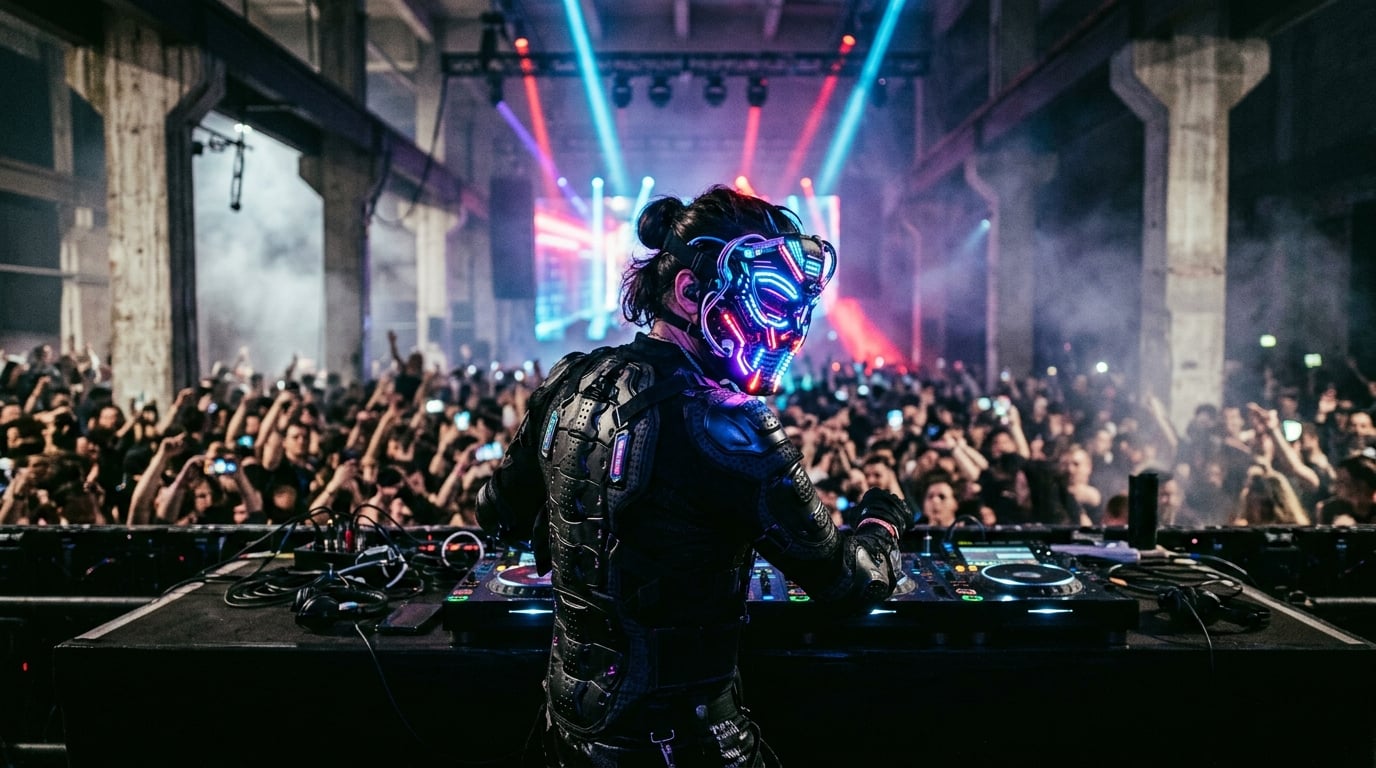
There is nothing inherently wrong with visual identity. GWAR did it in metal, Daft Punk turned it into a philosophy, and Angerfist built an entire Hardcore empire around a masked persona. The difference is that those acts married the image to undeniable musical substance. The 2026 wave of masked hard techno acts often inverts the formula: the visual spectacle arrives first, the production is outsourced second.
Let's put this in context with some data. Industry research estimates that up to 30% of electronic music tracks involve some form of ghost production, with approximately 40% of professional DJs having either considered or actively engaged ghost production services to maintain their release schedules (The Ghost Production). And 67% of DJ Mag Top 100 winners publicly endorse ghost production as a legitimate practice.
We are not here to condemn ghost production. It is part of the industry and, when handled transparently, it can be a valid form of collaboration. We will explore that nuance in a dedicated article. The issue is not the practice itself. The issue is when the visual persona becomes a substitute for musical identity, and the people paying for the show, promoters, fans, the scene, are left in the dark about what is actually happening behind the booth. As we explored in The death of the DJ-producer, identity once meant sound. That should still be the foundation.
II. The rider crisis: when the invoice kills the party
Behind every cancelled rave and every promoter who quietly exits the scene, there is usually one document that sealed the deal: the rider. Not the technical rider, the one that lists CDJ preferences and monitoring specs. The hospitality rider: the document that has quietly become the most destructive force in underground event economics.
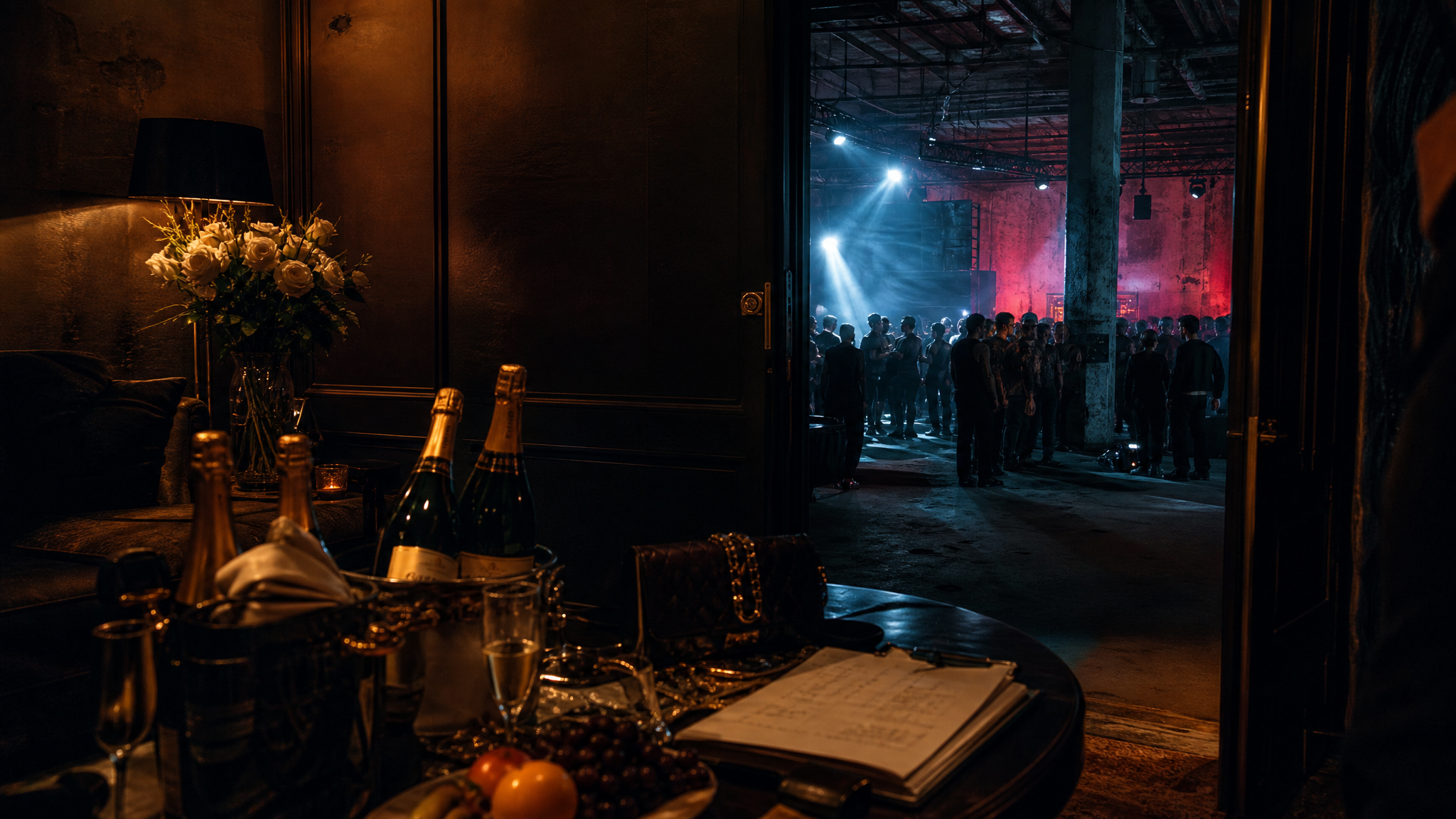
According to a widely cited Mixmag investigation, promoters routinely spend up to 80% of their total event budget on a single headliner. That number was already alarming in 2019. In 2026, production costs have risen 30 to 40% since the pandemic, insurance premiums have climbed 16 to 25% since 2022, and artist fees continue to escalate because touring is now the primary income source in the post-streaming era. The result: over one-third of festivals have operated at a loss in recent years (TicketFairy).
Let's translate that to the hard scene specifically. A local Hardcore promoter in Spain puts on a 500-capacity warehouse event. The venue costs €2,000. Sound and production: €3,000. Security, insurance, marketing: another €2,500. Total overhead: roughly €7,500 before a single artist is booked. Now imagine the headliner demands €5,000 plus business-class flights, a 5-star hotel for two nights, a specific brand of champagne backstage, and luxury ground transport. The "all-in" cost for one act can exceed the entire production budget.
What happens next is predictable. Tickets go up. The local warm-up DJs play for free or, worse, are asked to sell a minimum number of tickets to "earn" their slot, a practice Mixmag has labelled "pay-to-play" and which is devastating the pipeline of future headliners. The promoter barely breaks even on a good night. On a bad one, they lose everything, and the scene loses a venue.
This is not about begrudging artists a living wage. Touring is expensive, agencies take 10 to 15% commission, and career windows are short. We detailed the economics in Where is your money?. But there is a difference between a fair fee and a luxury lifestyle subsidy funded by a promoter who works three side jobs to keep the rave alive. The silence around this disparity is complicity.
III. The hardware heroes: DJ Bike and the SONAR machine
If you want to understand what "technical mastery" actually looks like in the hard scene, not as a marketing claim but as an engineering commitment, you need to know the name Alessandro Dilillo.
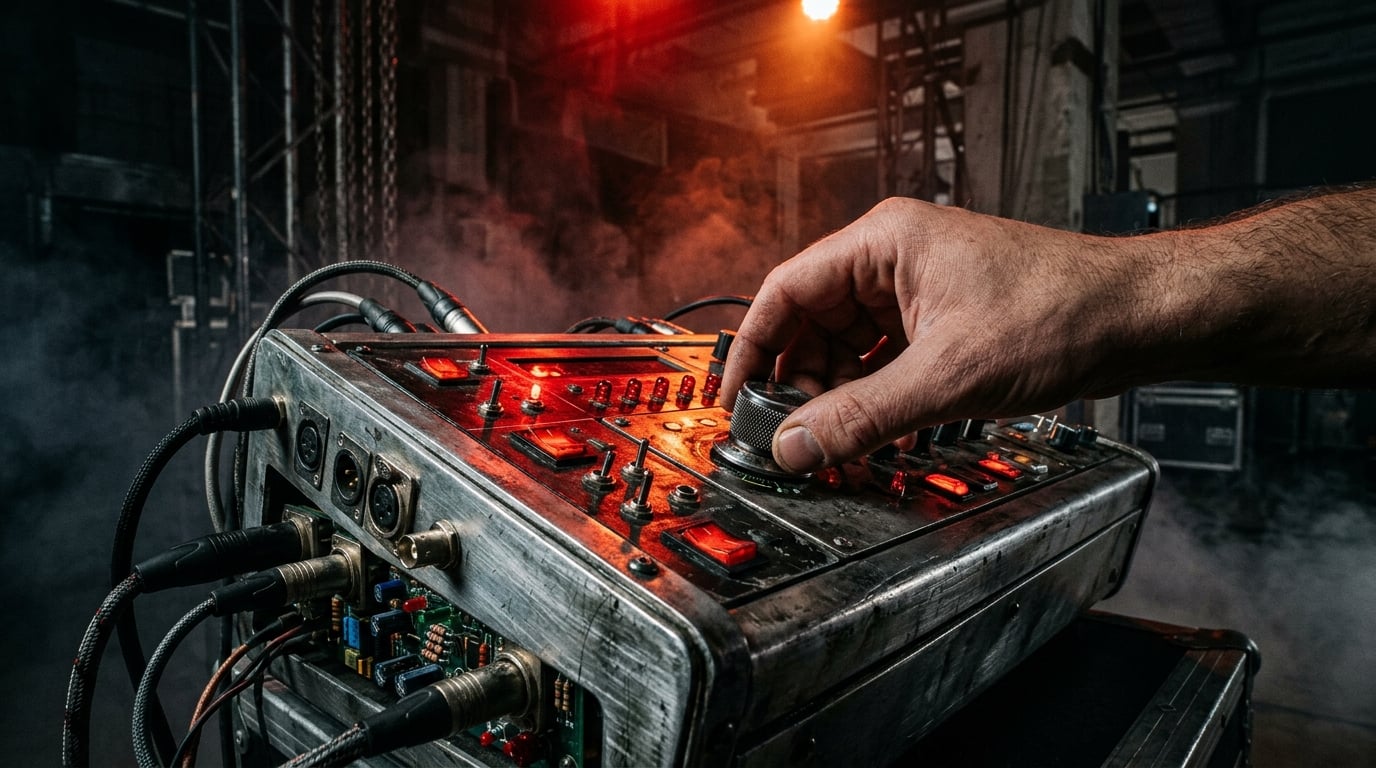
Better known as DJ Bike, later as Noize Suppressor, Dilillo started spinning records in 1988, years before Hardcore even had a name. He cut his teeth on Roland TR-909 drum machines and TB-303 synthesizers, the actual physical instruments that defined the early sound. After catching the attention of Luca Pretolesi (Digital Boy) at D-Boy Records, he rose through the Italian Hardcore ranks and eventually launched his own label, Noize Records, in 2005 (Music Alliance).
But the reason his name belongs in this conversation is the SONAR, a custom-built performance platform Dilillo unveiled in 2009 that remains one of the most ambitious pieces of live performance hardware in all of electronic music. The system uses high-tech infrared sensors that detect hand movements in real time, allowing the performer to trigger samples, manipulate sounds, and control the mix through physical gesture alone. No pre-loaded playlist. No safety net. The live footage shows something that looks closer to conducting an orchestra than pressing play.
The SONAR tour ran globally through major festivals, Thunderdome, Masters of Hardcore, Qlimax, Sensation, despite the enormous logistical complexity of transporting custom hardware across continents. That choice, to prioritize a 100% live, technically risky performance over the convenience of a USB stick, is the exact opposite of what the industry incentivizes today.
Alessandro Dilillo did not build the SONAR to go viral. He built it because the music demanded it. That distinction is everything.
IV. Atrezzo vs. live: the transparency question
In 2021, Deadmau5 admitted during a livestream that performing pre-recorded sets is common practice at major festivals because complex production schedules demand immaculate timing between music and visuals. His argument: when the lights sync perfectly to every drop, that is the giveaway. A live mix cannot achieve that level of visual coordination.
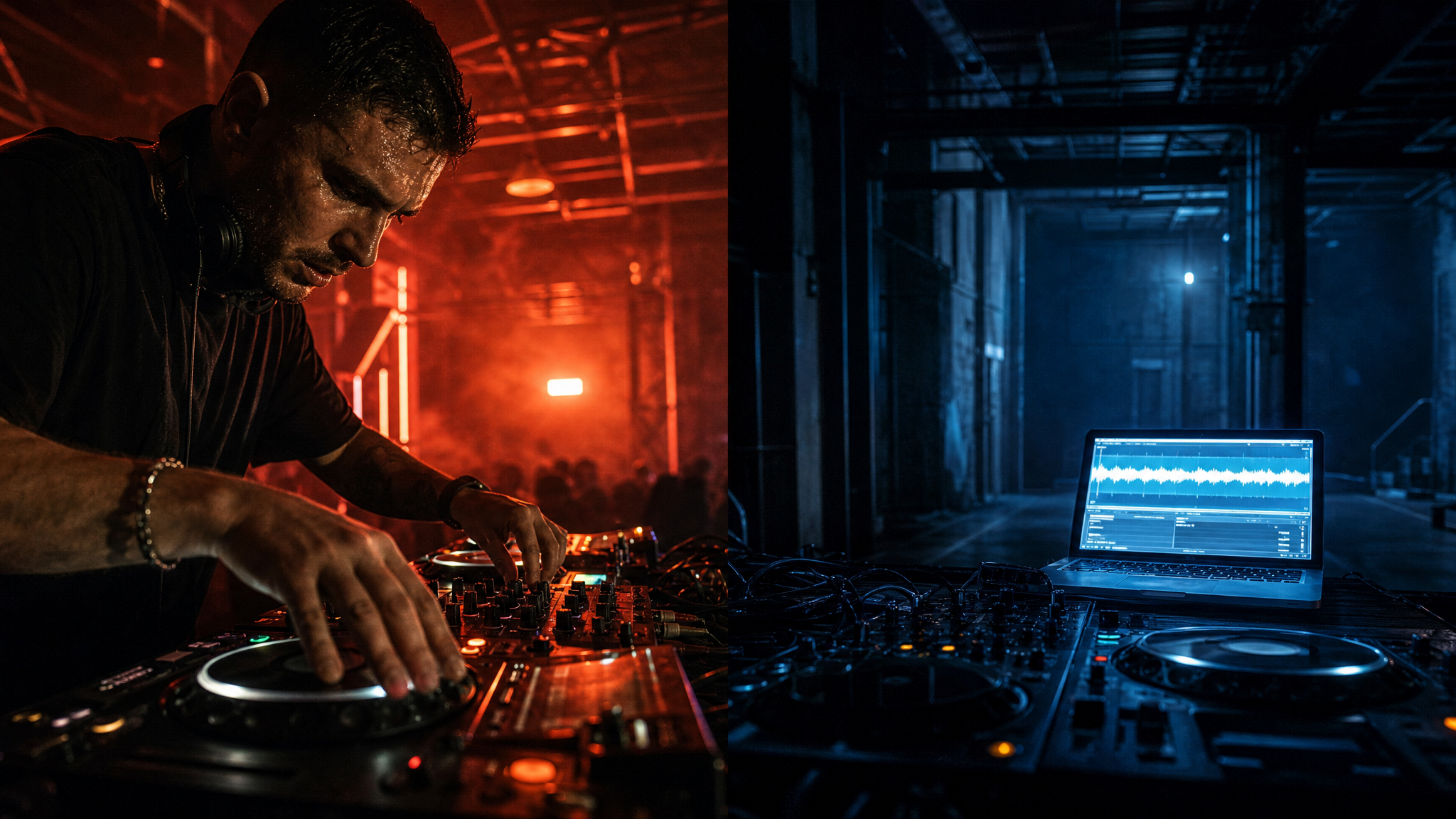
The counterargument came from James Hype, who launched a live show titled "SYNC", explicitly challenging the claim that live synchronization is impossible. Deadmau5 fired back, arguing that true real-time sync requires complex data handling (UDP sockets, not simple MIDI clock), a technical debate that most of the audience will never understand, but which exposes a deeper issue.
Again, let's be clear: we are not against pre-recorded sets. There are legitimate artistic and technical reasons for using them. Immersive audio-visual experiences, complex production timelines, acts that are fundamentally studio-based. Pre-recorded sets are part of the evolution of electronic music, and we plan to explore that topic in depth in a future article.
What we are against is the lack of transparency. Here is the uncomfortable truth: the audience at most large-scale events cannot tell the difference between a live mix and a playback. That is not the audience's fault. But when a promoter pays a live-performance fee and receives a pre-recorded set without being told, that is a breach of trust. When a manager negotiates a rider based on a "live show" that does not exist, that is a cost problem. The question is not whether pre-recorded sets are valid. It is whether everyone in the chain knows what they are paying for.
In the hard scene specifically, a Hardcore DJ who plays live, reading the room, adjusting BPM, risking a trainwreck transition, is offering something fundamentally different from an act that presses play on a 90-minute pre-arranged timeline with synced pyrotechnics. Both can deliver a great show. But the fee, the rider, and the expectations should reflect what is actually being delivered. Transparency between managers, artists, and promoters is the minimum standard.
As we argued in Artist vs. artist product, the distinction between an artist and a product is not philosophical. It is structural. And the financial agreements between all parties should reflect that structure honestly.
V. Breaking the silence: building equity over hype
This article is not a call to burn everything down, and it is not a moral judgement on ghost production or pre-recorded performances. Both are part of the modern landscape, and both can coexist with integrity when handled transparently. What this article is calling for is a minimum standard of honesty in the financial and creative relationships that hold this scene together, between managers, artists, and promoters. The hard scene is alive, it is growing, and the $15.1 billion global industry valuation proves there is real demand for this music. But demand without transparency is just a market. A scene needs principles.
Here is what we believe, based on years of running a label in the underground:
1. Invest in your sound, not your costume
The acts that survive decade after decade, Angerfist, Noize Suppressor, Promo, Neophyte, all have one thing in common: their sound is unmistakable before you see their face. If your brand disappears without the mask, you do not have a brand. You have a prop. Learn to build a kick that identifies you. We wrote a technical guide to exactly that in Clip to zero.
2. Demand transparency across the entire chain
If you are a promoter, ask clear questions before signing the contract: is the set live or pre-recorded? What does the rider actually include, and who absorbs the cost if conditions change? If you are a manager, be upfront about what your artist delivers on stage. If you are an artist, own your process, whether you produce alone, co-produce, or work with ghost producers. None of those paths are shameful. Hiding them is.
3. Support promoters who take risks on talent over spectacle
Every time you buy a ticket to a local warehouse event over a mega-festival, you are voting for the scene you want to exist. The promoters keeping small rooms alive are the ones most at risk from the rider inflation crisis. They are also the ones most likely to book the next act that actually matters.
4. Build equity, not virality
A TikTok clip has a shelf life of 72 hours. A technically brilliant live set, a signature sound, a body of work that defines a genre, those compound over years. Career equity is not built by chasing algorithms. It is built by making music that people remember after the screen goes dark. If you are starting out, begin with the fundamentals: How to send music to a record label is a practical starting point.
5. Break the silence
The biggest enabler of every problem in this article is not greed. It is silence. The promoter who says nothing when the rider arrives. The fan who says nothing when the set sounds identical to the studio version. The label that says nothing when the producer they signed cannot reproduce a single track live. Every time someone with a platform stays quiet to avoid burning a bridge, the bridge gets weaker for everyone else.
Conclusion: the sound is the only currency that does not depreciate
Alessandro Dilillo spent years building a machine that let him sculpt sound with his bare hands. He did not build it for Instagram. He built it because he believed that the connection between a performer and a room should be physical, risky, and real. That belief cost him convenience, logistics, and probably a significant amount of money. It also earned him a place in the permanent history of Hardcore music.
The hard scene in 2026 has more money, more fans, and more global reach than at any point in its history. It also has more masks, more riders, more pre-recorded sets, and more silence about how the economics actually work. Growth without transparency always produces inflation, in fees, in spectacle, and in the gap between what is promised and what is delivered.
At Magistrates Music, our position is simple: the sound is the foundation, and transparency is non-negotiable. Ghost production, pre-recorded sets, visual spectacle, none of these are inherently wrong. But when the financial and creative relationships between managers, artists, and promoters operate in the dark, everyone loses. The kick matters. But so does the honesty behind it.
Culture is not what we say. It is what we allow. And it is time to stop allowing the silence.
Ready to be heard?
If you produce Hardcore, Uptempo, Frenchcore, or Hard Techno and your sound speaks for itself, we want to hear it. Transparency, identity, and craft above all.